

Breaking down the filings, the issues, and the broader implications.
This section contains ongoing analysis of the Reichert case—connecting individual filings, rulings, and events across multiple proceedings.
These articles are based on court records, filings, and documented timelines, and are intended to provide context, identify patterns, and explain how the case has evolved.
What You’ll Find
- Explanations of key filings and court decisions
- Analysis of legal issues across multiple cases
- Articles connecting events that span different courts and timelines
- Ongoing commentary as new developments emerge
Series & Ongoing Work
This section will continue to expand over time.
Articles may be organized into recurring series, including:
- Case Breakdowns – explaining specific filings or rulings
- Issue Deep Dives – focused analysis of legal and procedural questions
- Pattern of Conduct – examining developments across multiple cases
- Updates & Briefs – shorter reactions to new filings and events
A Living Record
As litigation continues and additional records are obtained, new analysis will be added here.
Each article is connected to:
- Relevant cases
- Supporting filings and evidence
- The broader timeline of events
Follow the analysis. Review the record. See how the pieces connect.
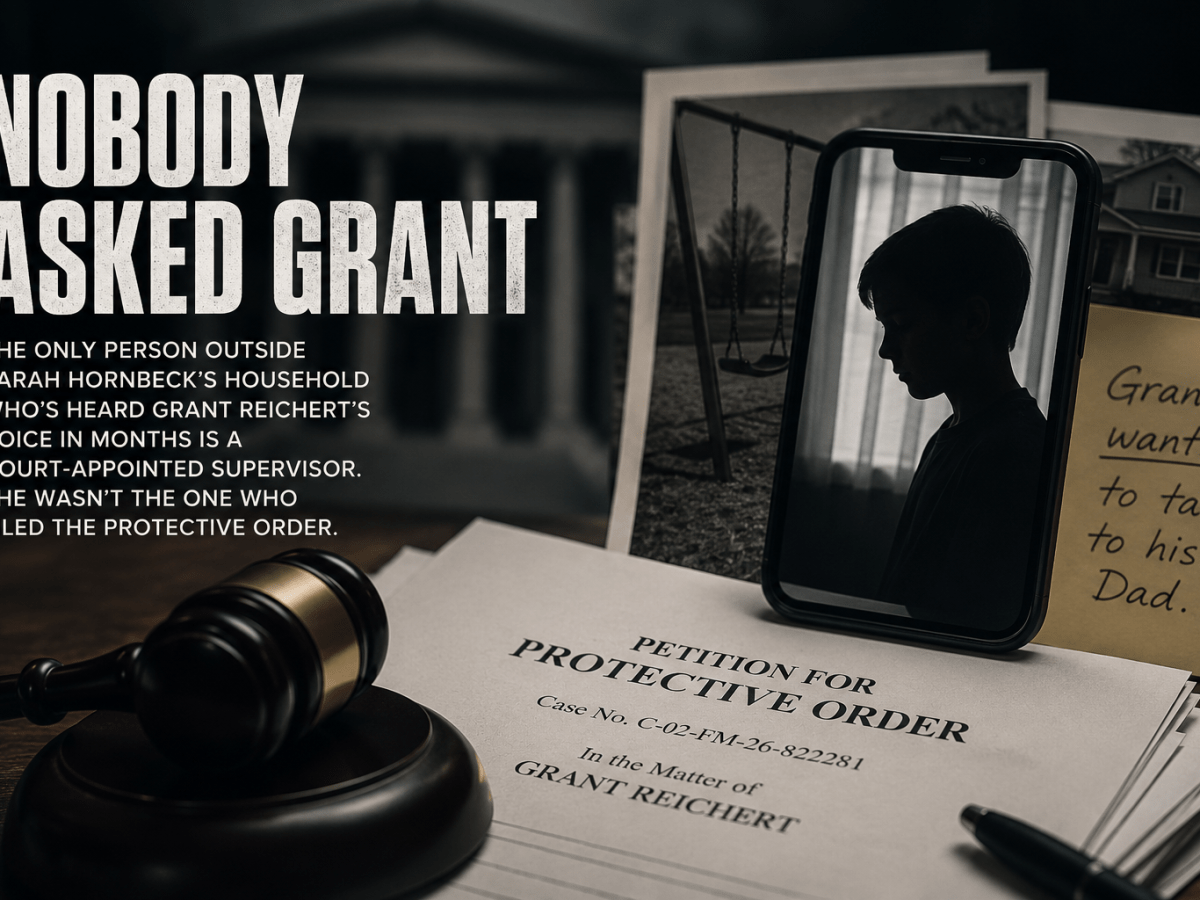
Nobody Asked Grant
Grant Reichert’s voice has only been heard by a court supervisor for months, amidst ongoing legal tensions with his mother, Sarah Hornbeck. A new protective order, filed without his consent or his father’s knowledge, raises concerns about communication suppression. Both the supervisor and Grant’s grandmother report evidence suggesting he desires contact with his father, intensifying…

Locked Out
A father who once had primary custody now finds himself locked out—not just of his child’s life, but of the courtroom itself. As proceedings move forward without his participation, filings raise urgent questions about jurisdiction, due process, and whether access to justice in Maryland depends on who the system allows through the door.

The Wrong County
The custody case of Jeffrey Reichert and Sarah Hornbeck highlights potential jurisdiction issues stemming from a disputed address filing in Anne Arundel County. Initially awarded primary custody, Reichert faced rulings stripping him of parental rights, influenced by Hornbeck’s misleading residency claims. The court’s authority to decide the case may have been improperly established.
The 90-Day Order: How an Unprecedented Custody Decision Became Invisible Law
The article analyzes the unreported appellate opinions in the case of Reichert v. Hornbeck, focusing on a 2022 ruling by Judge Alison L. Asti that stripped Jeffrey Reichert of all contact with his son for 90 days. It critiques the lack of precedent and transparency in family law, particularly regarding parental alienation disputes, which complicates…

The Standard Nobody Published: Maryland’s Amended Protective Order Law, Eight Years Without a Reported Case
The article examines unreported Maryland appellate decisions in the case of Reichert v. Hornbeck, highlighting a significant legal standard shift regarding protective orders made in 2014. Despite thousands of protective orders issued, there was no public guidance on the amended standard for eight years, raising concerns about transparency and the implications for individuals involved in…
Five Appeals, No Precedent: How One of Maryland’s Most Litigated Custody Cases Disappeared Into the Shadows
In a notable Maryland custody case, Reichert v. Hornbeck, the Court of Special Appeals issued a reported opinion in 2013, but following appeals up to 2026 produced five unreported opinions. These opinions addressed critical family law issues yet remain unpublished, highlighting a systemic problem in how family law precedents are recognized in Maryland.

She Slipped the Cuffs, Fought Two Officers, Drove Impaired — Then Walked Away Clean. Years Later, Under Oath, She Said She Didn’t Remember.
A deposition transcript reveals Sarah Hornbeck’s admissions of a 2018 DUI arrest and guilty plea, contradicting her earlier denials. The incident involved erratic driving, police confrontation, and alleged probation failures. Following the event, Hornbeck faced ongoing custody disputes and protective orders, raising concerns about her parental fitness and legal credibility.

The Hidden Appeals: How a Landmark Maryland Custody Case Disappeared Into Unpublished Decisions
The Maryland custody case, Reichert v. Hornbeck, initially established important legal precedent in 2013. However, subsequent appeals remained unreported, isolating the case’s later developments from public discourse. This fragmentation raises concerns about accountability, transparency, and the law’s evolution, illustrating the gaps in understanding complex family law issues.
The Case That Wouldn’t End
The Reichert v. Hornbeck case epitomizes the failures of family court systems, extending litigation over 16 years without resolution. Initially intended to address divorce issues comprehensively, it led to ongoing conflict and fragmentation. The case highlights how structural inadequacies result in continuous disputes, ultimately migrating to federal court, revealing systemic dysfunction.
When Family Court Fails: A Critical Analysis of Reichert v. Hornbeck
The case of Reichert v. Hornbeck exemplifies systemic flaws in family court litigation, highlighting issues such as excessive conflict and procedural breakdowns. Despite achieving legal resolutions, the case endured nearly a decade of instability, suggesting that family law must prioritize not just decision-making but also achieving meaningful closure for families and children involved.

Sarah Hornbeck’s Deposition Disaster: Five Admissions That Expose a Reckless Witch Hunt Masquerading as Justice
In the custody dispute between Sarah Hornbeck and Jeffrey Reichert, Hornbeck’s deposition revealed severe flaws in her accusations. Her failure to verify the child’s safety and reliance on hearsay as evidence exposed her actions as reckless rather than protective. All charges against Reichert were dismissed, undermining Hornbeck’s credibility and intentions.

Hornbeck’s Panic Play: Motion to Dismiss Filed Days After Deposition Raised Questions About Basis for Criminal Charges
In the federal case Reichert v. Hornbeck, Sarah Hornbeck filed a Motion to Dismiss shortly after a deposition revealed significant uncertainties about the evidence she presented when filing criminal charges against Jeff Reichert. Critics label her move as a desperate tactic to evade accountability, amidst serious questions about allegations made during a long custody dispute.
“I Don’t Recall”: Inside the Deposition That Could Unravel a Maryland Attorney’s Protective-Order Case
A recent deposition in the federal case Reichert v. Hornbeck is raising serious questions about the credibility of key accusations that once led to dozens of criminal charges against a father locked in a custody dispute.
During questioning, Sarah Hornbeck repeatedly stated she did not recall critical events surrounding those allegations—events that ultimately led to…
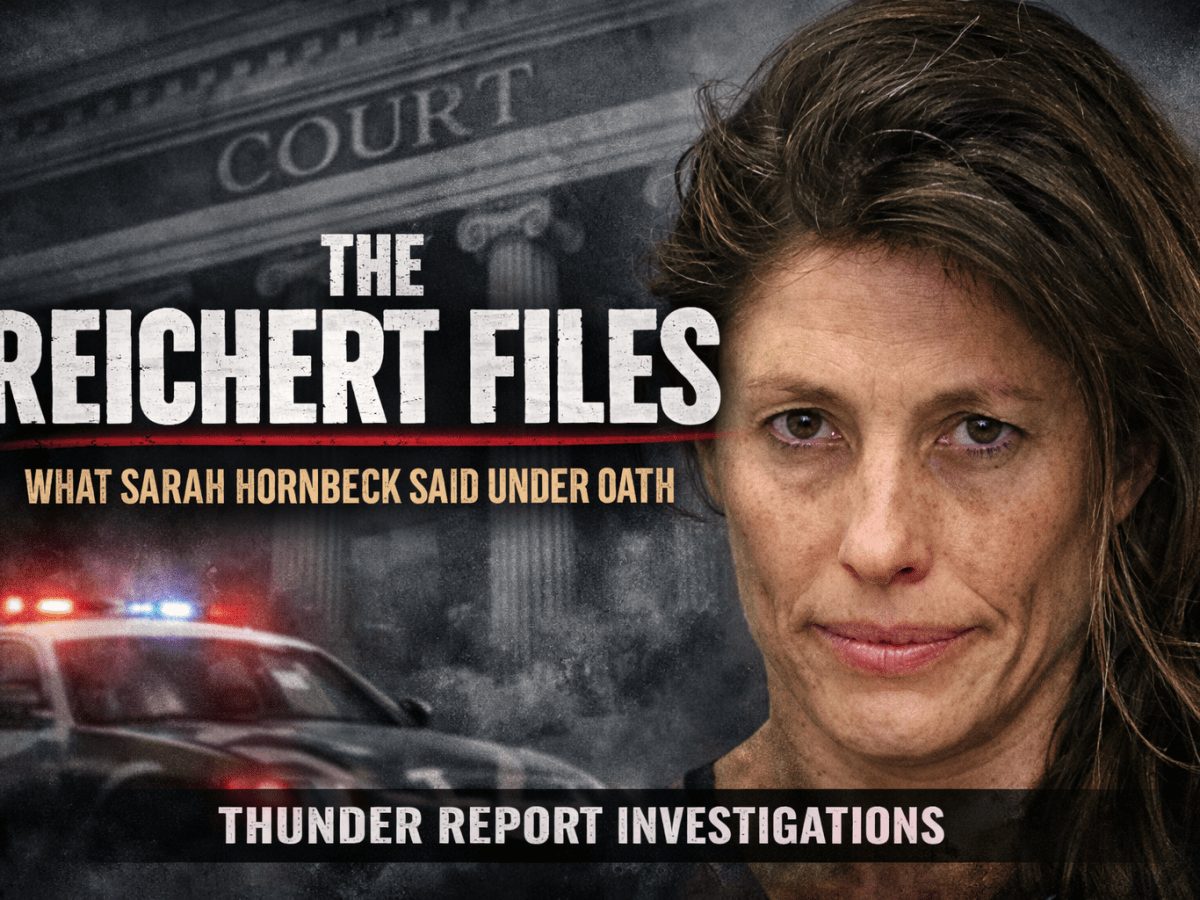
What Sarah Hornbeck Admitted Under Oath
A February 2026 deposition in the federal lawsuit between Jeff Reichert and Sarah Hornbeck revealed key details about their long-standing custody battle. Hornbeck disclosed a 2018 DUI arrest and faced scrutiny over discrepancies between her testimonies and court filings. Memory gaps arose throughout her sworn testimony, impacting future proceedings.
