

Criminalizing Custody Interference Is Necessary — And Jeff Reichert’s Case Shows Why Maryland’s System Is Failing
Maryland’s House Bill 942 aims to criminalize the interference of custody orders, a necessary reform addressing systemic failures highlighted by Jeff Reichert’s lengthy struggle to enforce his parental rights. His case underscores the need for symmetrical accountability in custody disputes, emphasizing that without cultural and structural changes, the bill risks being ineffective.


Maryland Attorney General Moves to Shut Down Jeff Reichert’s Federal Civil Rights Case
Jeff Reichert is battling a civil rights lawsuit against the Maryland Attorney General’s Office, which seeks to dismiss his case before discovery. His allegations involve repeated wrongful criminal charges and custody disputes impacting his relationship with his son. The outcome will test the limits of prosecutorial immunity and accountability in high-conflict family law cases.
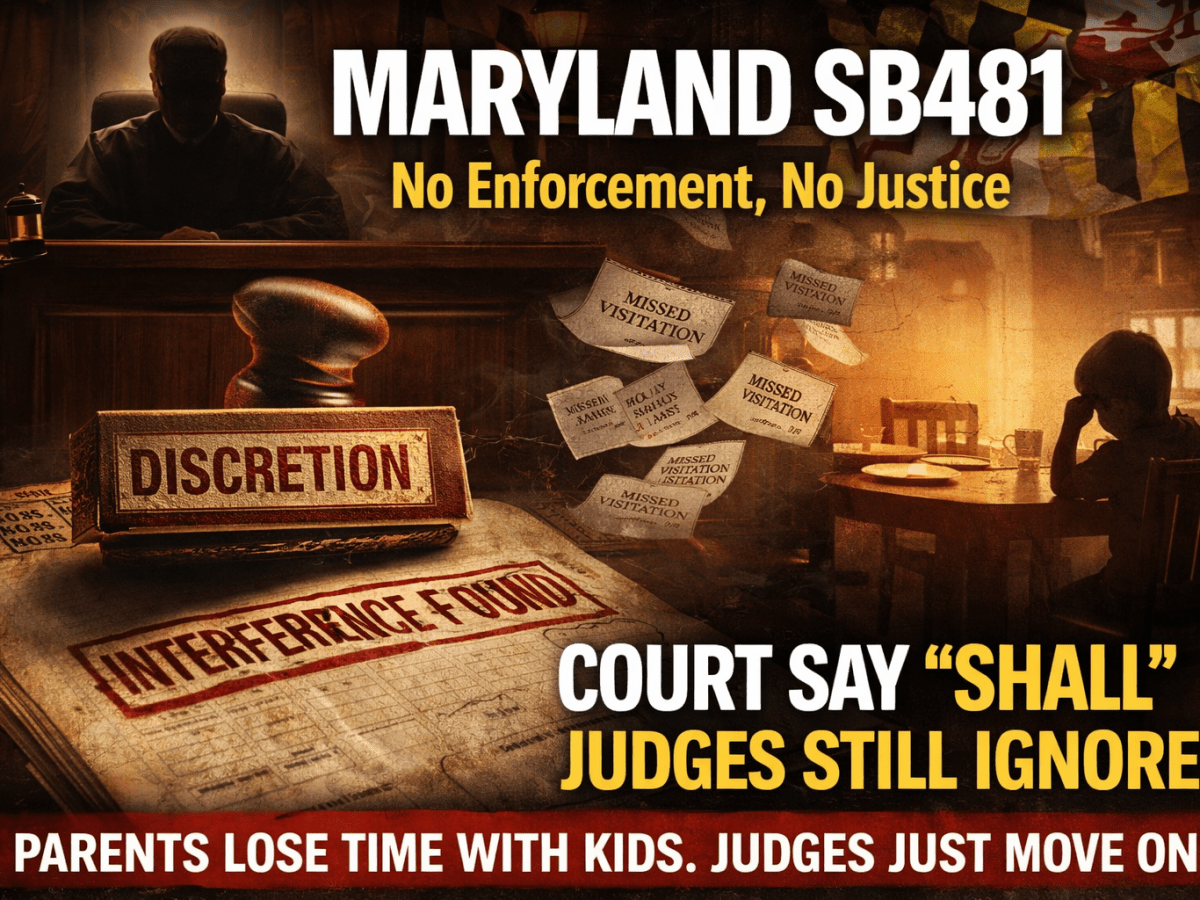
SB481 and the Enforcement Illusion: Why Stronger Language Would Not Have Helped Jeff Reichert
Maryland’s Senate Bill 481 aims to reform court-ordered visitation by mandating make-up time when interference occurs. However, Jeff Reichert’s case highlights a crucial enforcement issue: courts often fail to take action, rendering the bill ineffective. Without stronger accountability measures, statutory changes may not protect parental rights or foster parent-child relationships.
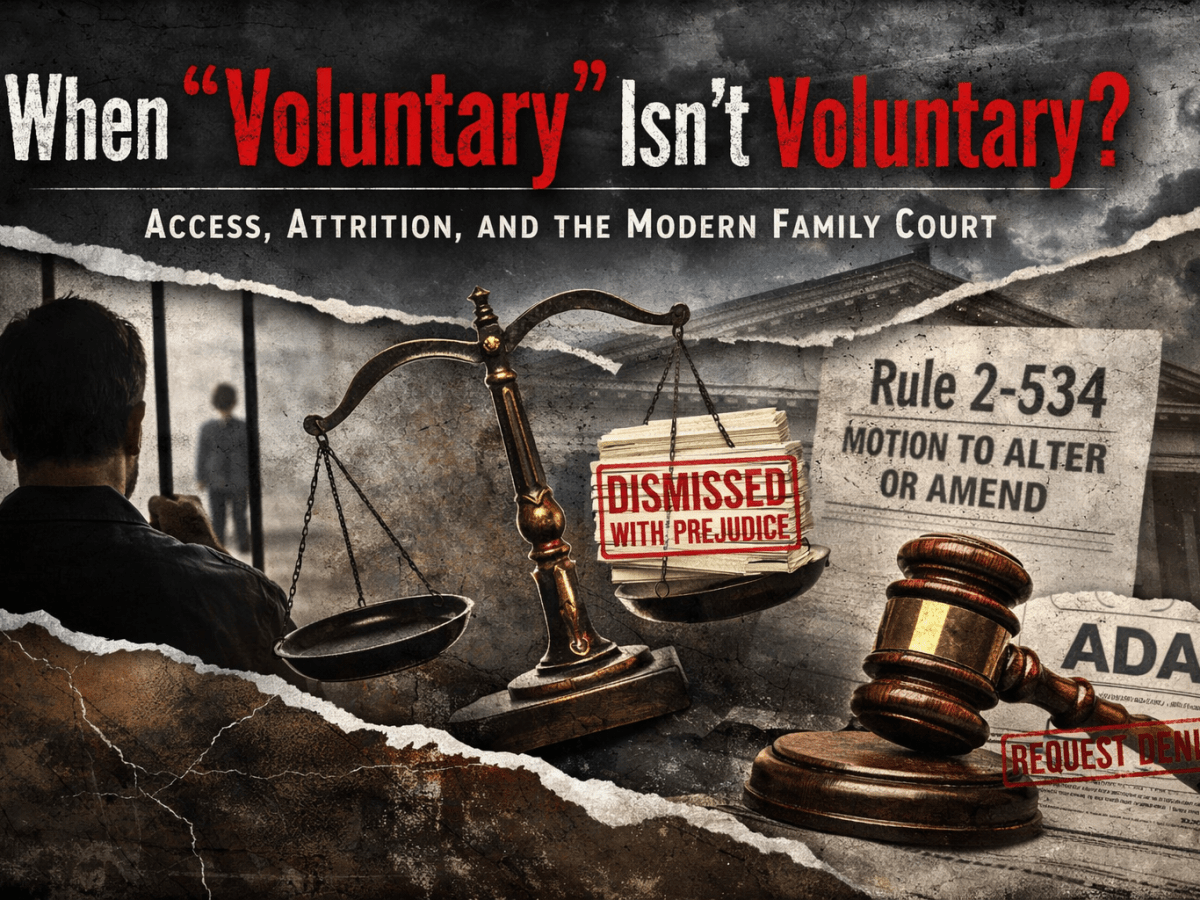
When “Voluntary” Isn’t Voluntary
The case of Reichert v. Hornbeck highlights the complexities of voluntary dismissals within family courts and the impact of access concerns, particularly under the ADA. It questions whether converting a voluntary dismissal to prejudice is warranted without exceptional circumstances. The outcome will influence how Maryland courts address access and procedural safeguards in family litigation.
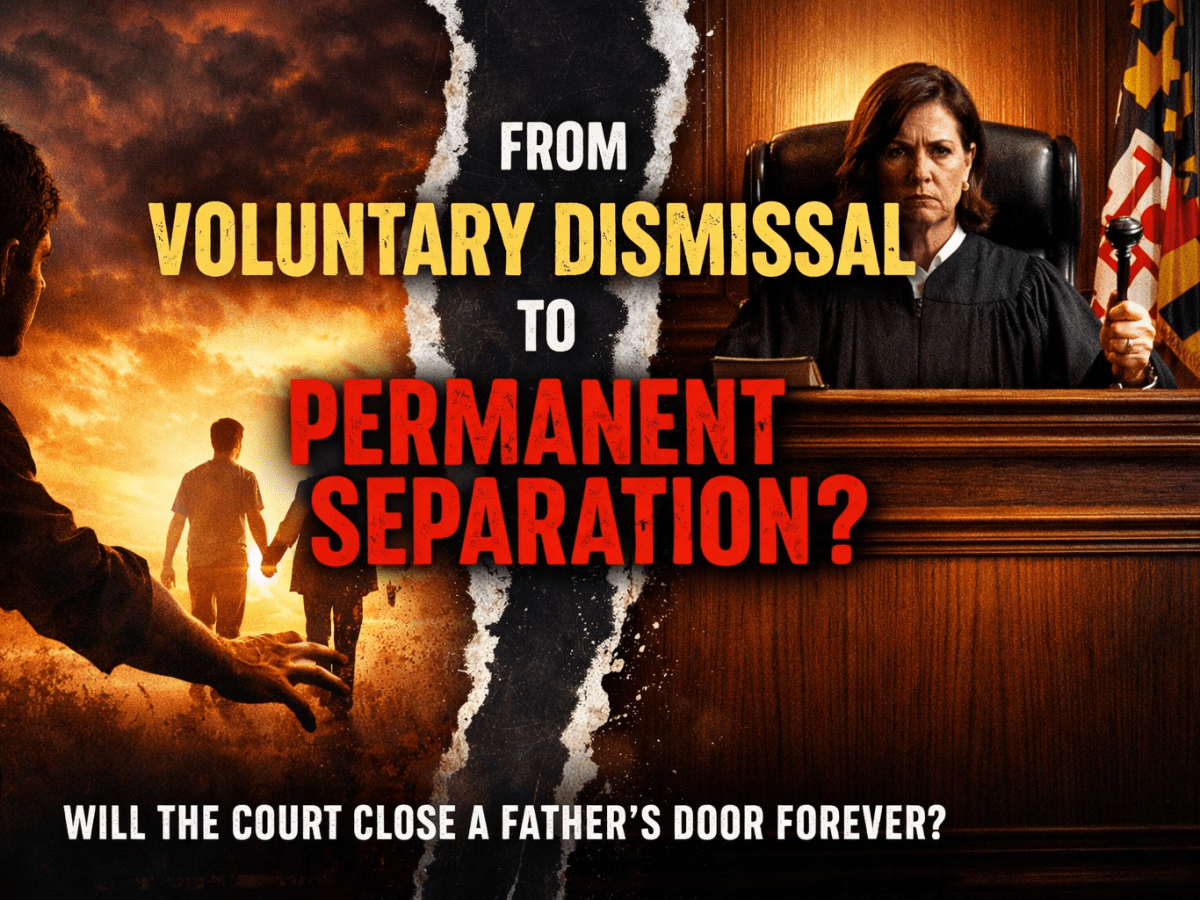
From Voluntary Dismissal to Permanent Erasure?
Judge Morris is tasked with deciding whether to convert Jeff Reichert’s voluntary dismissal of his emancipation petition into a dismissal with prejudice, which would permanently bar him from re-litigating his parental claims. The outcome will affect future adoption proceedings and raise concerns about procedural fairness and disability access rights in family court.

How Temporary Orders Become Permanent Punishment
Temporary orders in family court, intended to be provisional, often become permanent due to their early influence on judicial decisions. The focus on maintaining the status quo can entrench outcomes before full evidence is reviewed, disadvantaging one party and undermining due process, thus risking justice for children involved.

Withdrawn but Not Resolved: Inside a Maryland Case That Wouldn’t End Quietly
A Maryland case involving attorney Jeff Reichert illustrates complexities surrounding voluntary dismissals in family court. After withdrawing his petition without prejudice, further hearings continued despite the case’s closure, raising concerns about judicial pressure on self-represented litigants. The court ultimately opted against punitive measures, highlighting the tension between finality and fairness in family law.
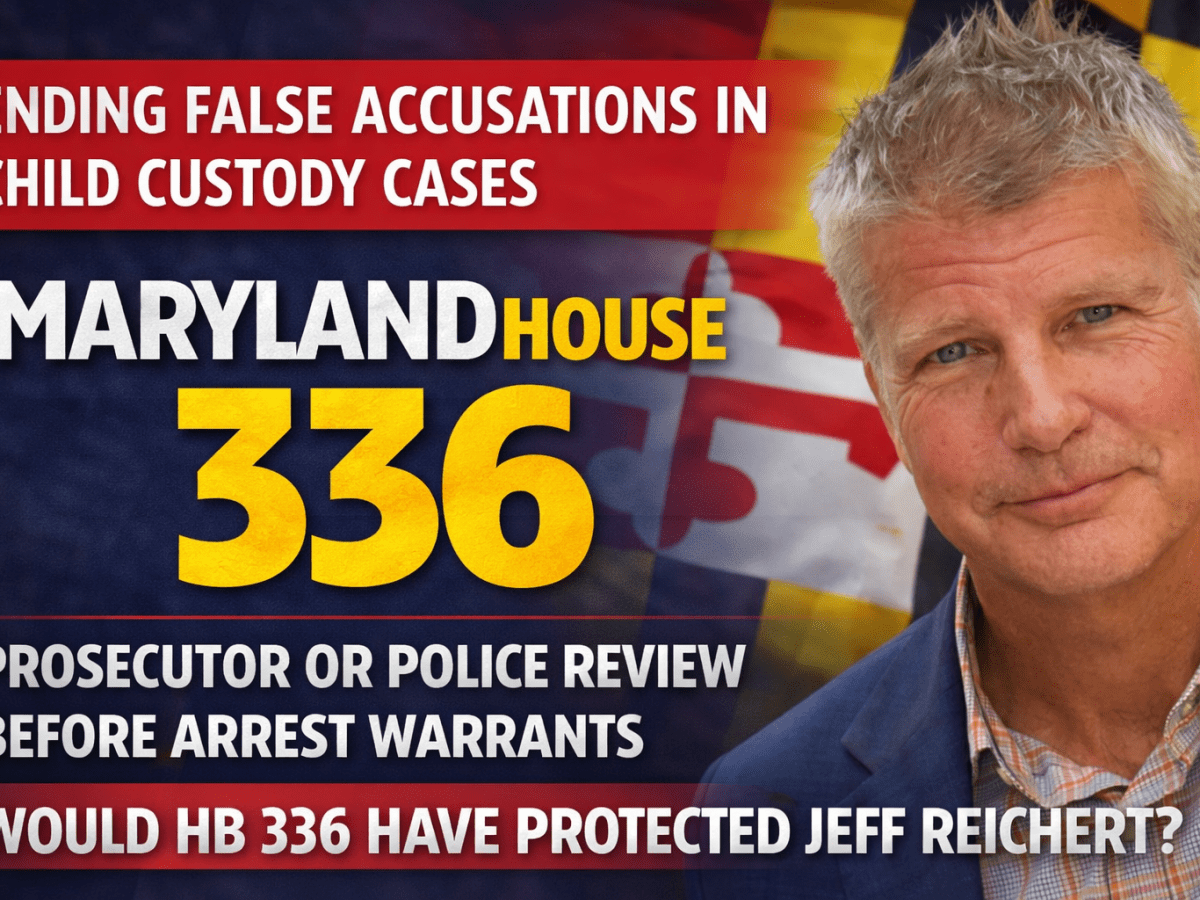
Would HB 336 Have Stopped the Cycle?
The Reichert v. Hornbeck case illustrates the detrimental effects of false accusations in custody disputes. Despite multiple charges against Jeff Reichert being dismissed, the repeated allegations led to arrests and significant disruptions in his life. Proposed House Bill 336 aims to reform the arrest process and increase penalties for false reporting, promoting accountability.
Five Hearings, No Parent: How Maryland Family Courts Build a Record Without Participation
The Maryland family court system inadequately addresses the needs of disabled parents, exemplified in the case of Jeffrey Reichert. Despite his requests for reasonable accommodations, hearings proceeded without his participation, leading to punitive outcomes. The federal court later confirmed his rights under the ADA, highlighting systemic failures in ensuring equitable access to justice.

Why Family Court Has Less Transparency Than Criminal Court
Family courts operate under significantly different rules than criminal courts, leading to decreased transparency. Key issues include sealed records, absence of juries, limited appeals, and broad judicial discretion. These factors create a system where misconduct is hard to detect, judicial errors go unchallenged, and accountability is often absent, undermining public trust.
Federal Court Grants ADA Access—State Family Court Still Risks Dismissing Disabled Parent’s Case
A federal civil-rights lawsuit filed by Jeffrey Reichert highlights systemic issues in family courts regarding disability rights. Despite a ruling permitting remote participation under the ADA, state proceedings moved forward without him, risking punitive dismissal for non-appearance. The case underscores the need for accessible justice for disabled litigants.

What Does “Due Process” Actually Mean in Family Court?
Due process is crucial in family court, often differing from common expectations. It fundamentally relies on notice, opportunity to be heard, and neutral adjudicators. However, practical implementation often undermines these principles, raising serious concerns about fairness and accountability. Cases like Jeff Reichert’s illustrate risks of prioritizing speed over due process, eroding public confidence.

What Is a Protective Order—and How Can It Be Weaponized?
Protective orders aim to prevent harm but expose vulnerabilities in the family court system, allowing severe restrictions based on unverified claims with minimal due process. Issued swiftly, these orders can profoundly impact individuals, often becoming the foundation for future legal actions. The imbalance between protection and rights can lead to systemic abuse, necessitating greater scrutiny…

Who Is Jeff Reichert—and Why This Case Matters
The article discusses the complexities of family court cases, using Jeff Reichert’s situation as a case study. It highlights how procedural decisions, rather than factual evidence, often determine outcomes, impacting parent-child relationships. The emphasis is on the lack of transparency and accountability within the system, underscoring broader structural issues affecting many litigants.

Lawsuit Filed in Baltimore County Alleging Illegal Protective Orders, Court Misconduct, and Years-Long Separation of Father and Son
Jeff Reichert, a disabled U.S. Army veteran, has filed a lawsuit against multiple parties, including the State of Maryland, after being separated from his son for nearly four years due to illegal protective orders and court failures. The case highlights systemic issues regarding parental rights and the enforcement of unserved or defective orders.

The Case Against Sarah Hornbeck: An Exposé of Lies, Abuse, Crimes, and the System That Enabled Them
A federal judge has allowed Reichert v. Hornbeck to move forward, centering on allegations that false protective orders and fabricated criminal complaints were used to trigger wrongful arrests and sever a father’s relationship with his son. The case now proceeds on a focused malicious-prosecution claim, putting the alleged weaponization of family and criminal courts squarely…

Concordia Prep’s Dirty Secret: How a Christian School and Its Lawyer Colluded to Erase a Father
A Christian preparatory school that preaches faith and character is accused of doing the opposite behind closed doors. Concordia Prep’s Dirty Secret details how Concordia Preparatory School and its attorney allegedly concealed a child’s enrollment, selectively enforced court orders, silenced a minor’s voice, and helped erase a father from his son’s life—triggering imminent litigation and…

Friday Night Lights, Dark Family Secrets: How a Father Who Won Was Erased — And Who Profited
A Maryland father who once beat the family court system and won full custody has been systematically erased from his son’s life. From protective orders to police intimidation and schools shutting their doors, every institution has been weaponized to enforce his absence. This isn’t a custody dispute. It’s a hit — executed in plain sight…
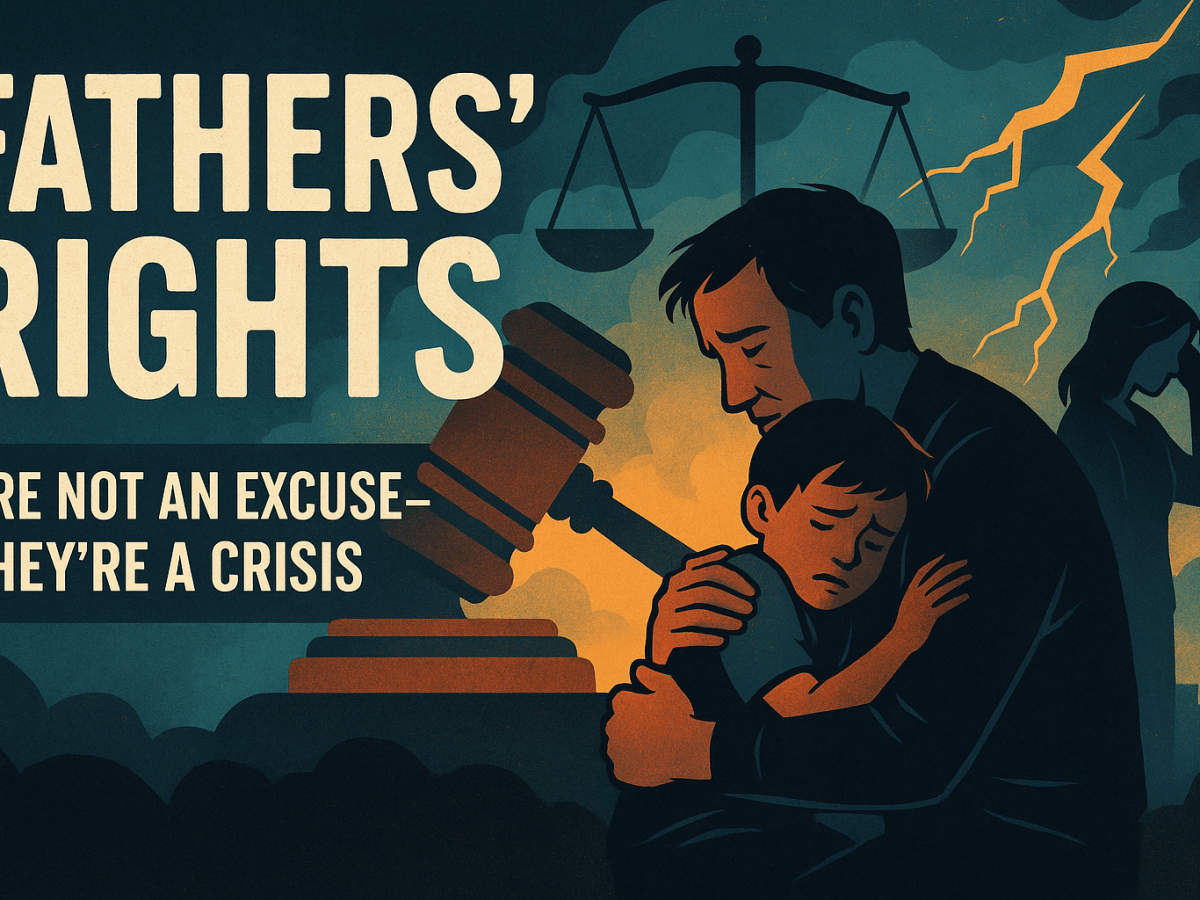
Fathers’ Rights Are Not an Excuse—They’re a Crisis
The author emphasizes that fathers often face systemic barriers in family courts, leading to significant emotional and financial struggles despite their efforts to maintain parental relationships. The case of Jeff Reichert illustrates these issues, revealing that even knowledgeable and determined fathers can be effectively erased from their children’s lives. Both parents’ involvement is crucial for…

The Opportunist: From Gun Board Failure to Family Court Predator
John H. Michel, a Maryland attorney, exemplifies reckless ambition and opportunism. Rejected from the Handgun Permit Review Board for endangering public safety, he pivoted to family law, manipulating circumstances following his wife’s death to gain influence over a child. Observers criticize his lack of qualifications and dangerous tendencies in parenting and public service.

Concordia Preparatory School: A Tarnished Legacy of Misconduct and Misplaced Priorities
Concordia Preparatory School in Towson, Maryland, is facing a legacy of lawsuits, a student sex assault conviction, and accusations of prioritizing athletics over safety and academics. Despite denying wrongdoing and citing a “zero-tolerance” policy, critics say Concordia has fostered a culture of misconduct and secrecy that raises serious questions for parents considering enrollment.

Maryland Punishes Parents Harder Than Criminals — And It’s a National Shame
In Maryland, a father can be jailed for fighting false accusations in family court while a teenager who commits an armed carjacking is released the same night. Parents like Jeff Reichert have been punished more severely for wanting to see their children than violent offenders face for terrorizing communities. At times, it seems easier to…

Family Court as Legalized Child Trafficking: The Case of Reichert v. Hornbeck
The Reichert v. Hornbeck case in Maryland exposes a troubling aspect of American family courts, where parental rights are commodified and children are treated as assets. Jeff Reichert’s fight against wrongful judicial maneuvers highlights systemic issues, resembling trafficking. The case exemplifies how financial motives can lead to unjust legal outcomes for families.

Child Support & “Double Dipping” – The Absurd Economics of Erasing a Parent
The Reichert v. Hornbeck case highlights a troubling practice in Maryland’s family court, where a biological father is forced to pay child support while being replaced by the mother’s partner as the child’s legal father. This scenario raises concerns over parental rights, financial exploitation, and the psychological impact on the child, urging lawmakers to address…

Maryland’s New Family Law Loophole: Erasing Parents Without Evidence
In Reichert v. Hornbeck, a Maryland court’s ruling potentially undermines parental rights by granting John H. Michel, an unrelated third party, standing in a custody case without evidence or justification. This decision raises concerns about judicial overreach, placing fit biological parents at risk of losing rights based on arbitrary judicial discretion.
Order Granting John Michel’s Motion to Intervene
The order granted by Judge Elizabeth Morris names John Michel as the de facto father of Grant Reichert without proof, evidence, or stated reasoning. This decision from the Anne Arundel County Family Court is seen as a troubling precedent.

The Blueprint of Family Court Abuse: Lessons from Reichert v. Hornbeck
The case of Reichert v. Hornbeck illustrates systemic abuses in family courts, where protective orders serve as weapons against fit parents, particularly targeting disabled individuals. Judicial biases, venue shopping, and neglect of ADA rights exacerbate the plight of parents, leading to child alienation and prolonged legal battles for profit, undermining constitutional protections.

Where Is the Actual Abuse?
Jeff Reichert has no criminal conviction, no sustained finding of harm, and no credible evidence of abuse—yet he’s been violently arrested, silenced in court, and cut off from his son for nearly four years. Meanwhile, the real abusers—backed by money, influence, and judicial indifference—have faced no consequences. This is not a custody battle. This is…

The Coach’s Court: The Life and Love of Jeff Reichert
Jeff Reichert’s journey from a competitive child in Virginia Beach to a multifaceted career as a coach, attorney, and military officer reflects his enduring love for basketball and his deep commitment to mentoring youth. Despite facing personal and professional challenges, including false accusations and the loss of his son, Jeff remains hopeful for reconciliation and…
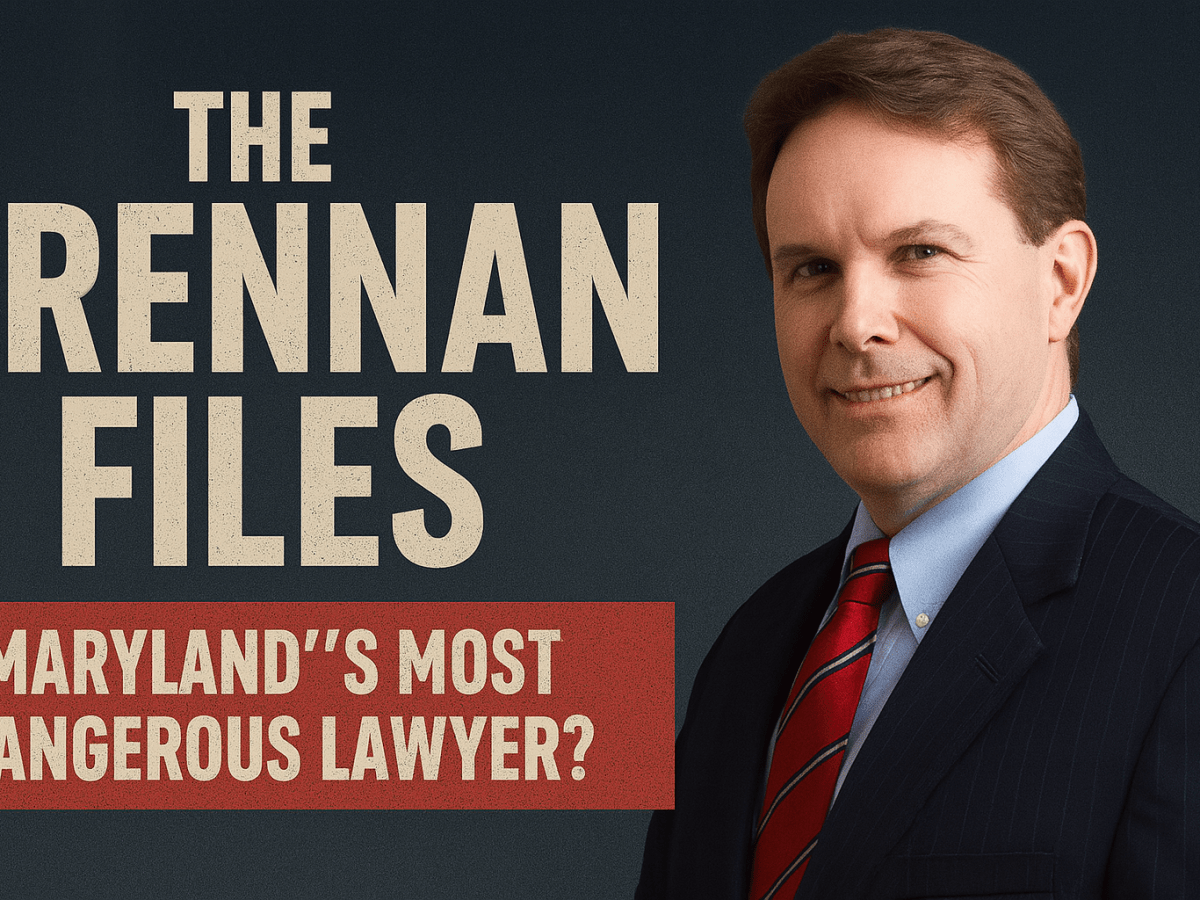
The Brennan Files: Maryland’s Most Dangerous Lawyer?
Brennan McCarthy isn’t just another divorce lawyer—he’s the architect behind one of Maryland’s most egregious custody scandals. Through venue shopping, legal intimidation, and courtroom manipulation, McCarthy helped orchestrate a midnight custody ambush and years of retaliatory litigation. This exposé uncovers the tactics, the players, and the disturbing pattern of abuse hiding behind a law degree.
