
Key revelations from a February 2026 deposition in the federal lawsuit filed by Jeffrey Reichert
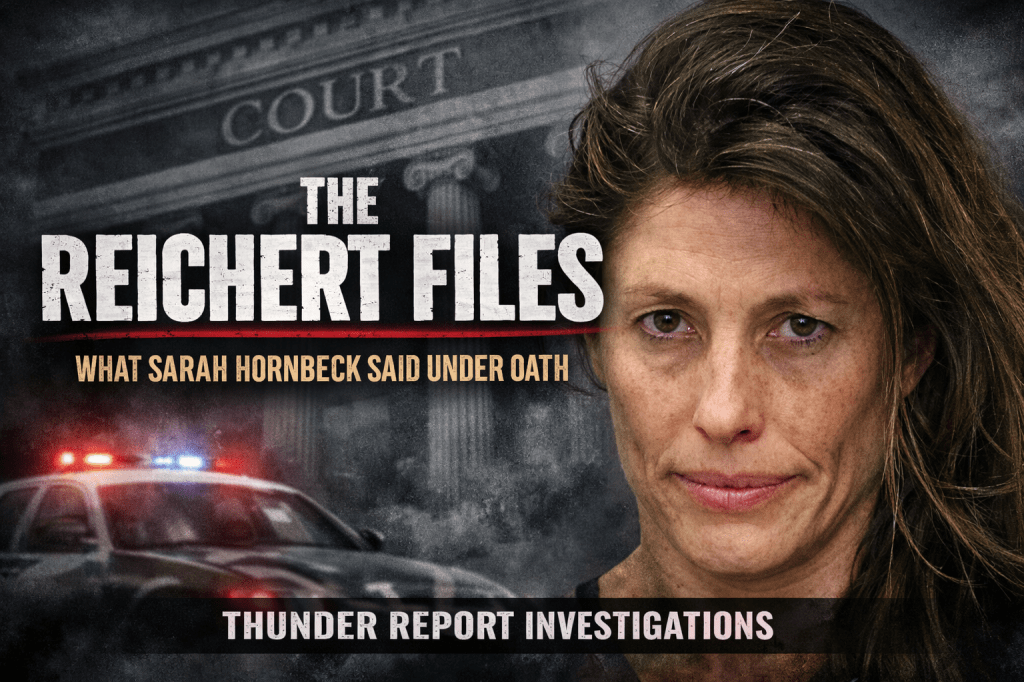
For more than a decade, the legal battle between Jeff Reichert and Sarah Hornbeck has stretched across multiple courts, generating protective orders, custody disputes, criminal complaints, and now federal litigation.
The conflict has produced thousands of pages of court filings and years of competing narratives.
But during a February 27, 2026 deposition in federal court, Hornbeck was questioned under oath by Reichert’s attorney in a recorded proceeding that shed new light on several key events in the case.
The sworn testimony — conducted remotely from Hornbeck’s home and transcribed by a court reporter — revealed a series of admissions, clarifications, and memory gaps that may become central to the litigation.
The deposition provides one of the clearest glimpses yet into the disputed events behind one of Maryland’s most contentious custody battles.
Below are the most significant revelations from Hornbeck’s sworn testimony.
A 2018 Arrest Comes Into Focus
One of the most notable moments in the deposition came when Hornbeck was questioned about a 2018 arrest in Charles County, Maryland.
Under oath, Hornbeck confirmed that she had been arrested and charged with driving under the influence, assault on a law enforcement officer, and related offenses stemming from what she described as a drug and alcohol incident.
“Yes,” Hornbeck answered when asked whether the arrest arose from a drug and alcohol event.
When asked about the outcome of the case, she testified that the charges resulted in probation before judgment, a Maryland disposition that allows a defendant to avoid a conviction if probation is successfully completed.
“I believe one year of unsupervised probation,” she said.
But the questioning did not stop there.
Attorney Ibrahim Reyes then referenced the court record, stating that the probation had actually lasted two years and ended in August of 2020.
Hornbeck paused.
“I would need to review the documents,” she replied. “But yes, that sounds approximately correct.”
The exchange may seem minor on its face, but it illustrates the type of factual details that often become critical in civil litigation — especially when testimony differs from documentary records.
Why Were the Allegations Previously Denied?
Another exchange raised questions about earlier legal filings connected to the arrest.
Reyes asked Hornbeck about pleadings submitted in the case in which she had denied the allegations surrounding the incident.
“Do you know why you denied those allegations?” Reyes asked.
Hornbeck’s response was brief.
“I don’t recall.”
The moment was striking in part because court pleadings are sworn legal documents. When later testimony differs from earlier filings, attorneys often scrutinize those differences closely.
Whether that issue ultimately becomes significant will likely depend on how the parties present documentary evidence during the course of the federal case.
Questions About Relocation
The deposition also revisited an earlier chapter of the dispute between Reichert and Hornbeck: whether there had been an agreement regarding a relocation to Anne Arundel County in 2015.
Reyes asked whether Hornbeck had entered into a written agreement with Reichert regarding the move.
“No,” she answered.
“So there was no agreement?” he asked.
“That is correct.”
The questioning then turned to travel involving their son during the summer of 2016, including whether Hornbeck had taken the child to Maine and whether Reichert or a court had approved the trip.
“I don’t recall,” she said when asked whether Reichert had given consent.
Pressed further on whether she knew if such approval would have been required, she replied:
“I don’t recall exactly the details of that timeframe. I am confident we did visit Maine during that time though.”
Relocation disputes often become flashpoints in custody litigation, and the line of questioning suggested that disagreements over residence and travel may have been part of the broader conflict between the parents.
Custody Battles Before the Protective Orders
The deposition also explored the years leading up to the events that later triggered criminal complaints and protective orders.
Reyes asked Hornbeck to describe the custody disputes between 2018 and July of 2020.
Hornbeck acknowledged that conflicts were ongoing but struggled to recall specific incidents.
“Custody disputes ongoing,” she said. “I’m not sure how to answer.”
When asked again to describe those disputes in more detail, she responded:
“I don’t recall exactly.”
The exchange underscored how long the conflict between the parents has persisted — and how many legal proceedings have occurred during that time.
Repeated “I Don’t Recall” Responses
Throughout the deposition, Hornbeck repeatedly stated that she could not remember details about events tied to the litigation.
Among the issues she said she could not recall were:
- the specifics of certain custody disputes
- the circumstances of some law enforcement contacts
- details of earlier allegations in court filings
At one point, Reyes asked whether there was a reason she could not recall events from the relevant period.
“Do you have a memory issue?” he asked.
“No,” Hornbeck replied.
When asked why events from the timeframe were difficult to remember, she again answered simply:
“I don’t recall.”
Memory gaps are not uncommon in depositions involving events that occurred years earlier. But they can take on greater importance when testimony is later compared with emails, police records, phone logs, and court filings.
A Case Defined by Litigation
The deposition also offered a glimpse into the intensity of the legal battle between the two parents.
At one point during the proceeding, Hornbeck’s attorney objected to the line of questioning and defended his client in unusually strong terms.
“You are deposing a woman who has been the victim of domestic violence and a subject of a campaign of terror by this individual,” he said.
Reichert disputes those allegations and has filed his own claims in federal court.
The competing narratives have produced years of litigation across multiple jurisdictions, with each side accusing the other of misconduct.
The deposition makes clear that the case is not simply about a single event or court ruling. It is the product of a conflict that has unfolded over more than a decade.
The Significance of the Deposition
Depositions are often one of the most consequential stages of civil litigation.
They allow attorneys to question witnesses under oath, lock testimony into the record, and compare statements with documentary evidence gathered during discovery.
The Hornbeck deposition is likely to be closely examined as the federal case proceeds.
What ultimately matters most may not be any single answer, but how the sworn testimony aligns — or conflicts — with the documents and evidence that follow.
The Reichert Files
This article is part of The Reichert Files, an ongoing Thunder Report investigation examining the long-running legal conflict between Jeff Reichert and Sarah Hornbeck.
Future reporting will examine:
- the origins of the custody dispute
- the events surrounding the protective orders issued in 2020
- the role of law enforcement and court proceedings
- and the broader questions the case raises about family court and prolonged litigation.
The story is still unfolding.
And the deposition may only be the beginning.
Discover more from Reform Maryland Courts
Subscribe to get the latest posts sent to your email.
