
By Michael Phillips
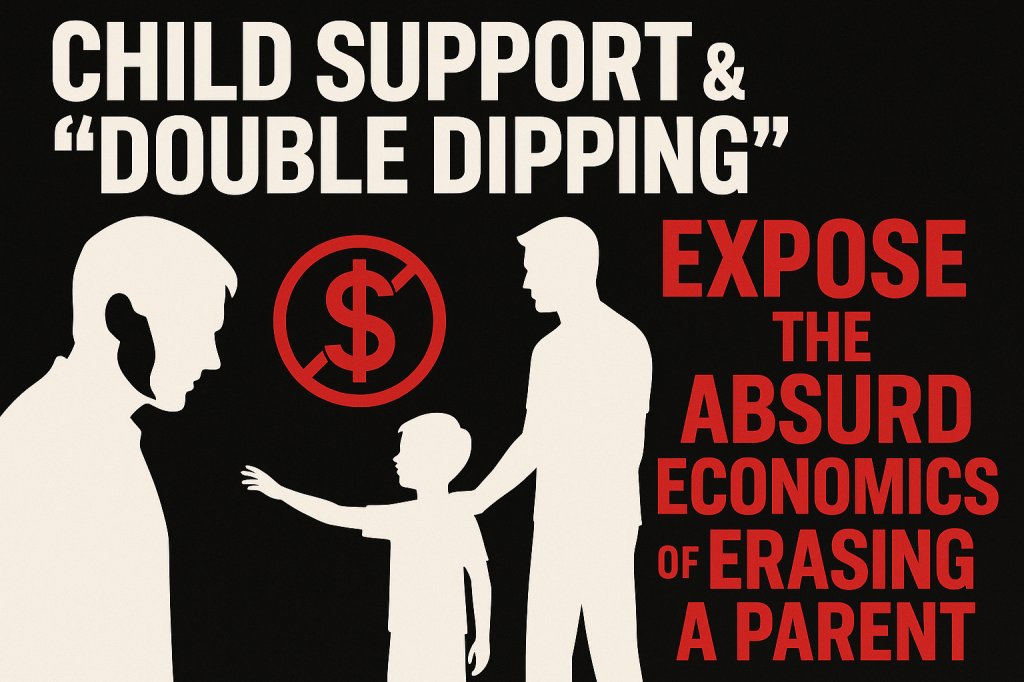
In the warped theater of Anne Arundel County Family Court, the Reichert v. Hornbeck saga has reached a point of pure economic absurdity: replacing a biological father while still charging him child support. It’s a practice that not only defies common sense but undermines the supposed “best interests of the child” that Maryland courts claim to serve.
Let’s strip away the polite legal language. This isn’t about supporting a child. This is about double dipping—creating a situation where the court treats one man as the “de facto father” while still bleeding the biological father financially, all while cutting him out of his child’s life.
How We Got Here
Jeff Reichert, the actual father of his son, Grant, once had full custody after the mother, Sarah Hornbeck, was arrested for DUI and deemed unfit to care for him. That should have been the end of the story. But Maryland’s family court system allowed politics, influence, and procedural manipulation to reopen the case—moving it to a jurisdiction none of the parties even lived in and reopening wounds long since stitched closed.
Now, years later, Jeff is staring down a Kafkaesque twist: John Michel, Sarah’s current partner, was granted the status of “intervenor” and is being treated by the court as if he’s Grant’s legal father—without proof of marriage, without evidence of paternity, and without any inquiry into what the child actually wants.
Yet despite effectively replacing Jeff in his son’s life, the court still demands that Jeff pay child support.
The Logic of Lunacy
Think about this: In no other area of law would you be forced to keep paying for something that the court has actively taken from you and given to someone else.
- If your car is repossessed, you don’t keep making the payments while someone else drives it.
- If your business is seized, you don’t keep paying its payroll while being barred from entering the building.
- But in Maryland family court, you can be stripped of custody, denied access, replaced as a parent—and still be ordered to send a monthly check.
That’s not support for the child; that’s state-enforced economic punishment of a removed parent.
The Hidden Incentive
This “double dipping” scheme isn’t an accident—it’s an economic feature of the family court system. In Maryland, child support enforcement is tied to Title IV-D federal funding, which rewards states financially for the amount of child support collected. The more they order and enforce, the more money flows into the system.
By replacing a father but keeping him on the hook financially, the court maximizes its cash flow:
- Michel fills the emotional role, cementing Sarah’s household as the de facto family unit.
- Jeff fills the financial role, ensuring the state’s support enforcement coffers stay full.
This arrangement works beautifully—if you’re the court, the attorneys, or the state budget. For the child? Not so much.
Impact on the Child
Grant isn’t just losing his father. He’s being told, in the clearest terms possible, that his relationship with Jeff is expendable—while Jeff is told that his wallet isn’t. The court is effectively monetizing alienation, reinforcing the idea that parenting is a financial transaction, not a relationship.
And the psychological damage is deep:
- Grant learns that his father’s role can be reassigned like a temp worker’s desk.
- Jeff is forced into a position where paying support doesn’t buy him time, rights, or influence—just a monthly reminder of what’s been stolen.
The Precedent This Sets
If this stands, Maryland will have set a dangerous precedent: A “good fit” biological parent can be replaced in their child’s life without due process, yet still be financially liable for the child’s upbringing under someone else’s roof.
It’s the legal equivalent of taxation without representation—parenting without participation. And if it can happen here, it can happen to any parent in the state.
The Call to Action
Maryland lawmakers need to step in and address this loophole before it becomes standard operating procedure.
- No parent should be financially liable for a child from whom they’ve been involuntarily and unlawfully alienated.
- Courts should be barred from enforcing child support against a biological parent while legally recognizing someone else as the child’s primary parent without consent or a finding of unfitness.
Until then, Reichert v. Hornbeck will remain a textbook example of how family court can weaponize child support—not to protect children, but to enrich the system.
Discover more from Reform Maryland Courts
Subscribe to get the latest posts sent to your email.
